ADA-Compliant Portable Toilet Fundamentals for Occasion and Site Services
Anyone booking washrooms for a public event or an active website is normally managing a great deal at the same time: participation estimates, delivery home windows, irregular ground, weather, traffic flow, clean-up strategies, and price. Availability can obtain pressed right into the group of "we'll handle that with the washroom order." That is specifically where errors happen.
An ADA certified portable commode is not just a bigger device dropped someplace near the typical row. The federal access framework is a lot more particular than that. For mobile toilet rentals in the United States, the controling recommendation factor is the 2010 ADA Standards for Accessible Design, in addition to how those requirements are analyzed by the united state Accessibility Board and the Division of Justice. That matters because the device itself is just part of the image. Positioning, route, entryway access, interior clearances, and recognition all count.
If you are arranging mobile bathrooms for a celebration, wedding celebration, public event, school feature, fairground event, neighborhood race, or a comparable setup, it helps to think of access as part of the site strategy as opposed to an add-on. People do not experience conformity theoretically. They experience it in the area, on crushed rock, in mud, after dark, in a mobility device, with a walker, or while aiding a member of the family with a crowded path.
The fundamental regulation individuals miss first
For collections of mobile single-user commode units, a minimum of 5 percent of the systems in each cluster need to come. The Accessibility Board's support explains that this uses also at temporary occasions. That point captures lots of coordinators off guard because short-term arrangements are often treated delicately, as though much shorter period indicates looser rules. It does not function that way.
The phrase "in each cluster" is where the real preparation begins. If you have multiple financial institutions of devices spread throughout a residential or commercial property, you can not treat the entire occasion total amount as one big pool and area the available devices any place it is simplest for distribution. Accessibility has to be attended to where the systems are really grouped. In useful terms, that implies a website with washroom financial institutions at the entry, near food solution, and by the efficiency area requires to think about each of those groupings carefully.
That is typically the difference in between paper compliance and functional access. I have seen layouts where a coordinator felt covered since one ada obtainable mobile washroom was someplace on website, yet the person who required it needed to cross a field or navigate a crowded route to reach it. Even without entering into added policies that are not in the verified standards right here, good sense and excellent planning tell you that placement matters an excellent deal.
"Obtainable" indicates more than bigger
A lot of people use expressions like ada mobile restroom or ada handicap available portable toilet to indicate "the large one." That shorthand is understandable, however it oversimplifies what the requirements expect.
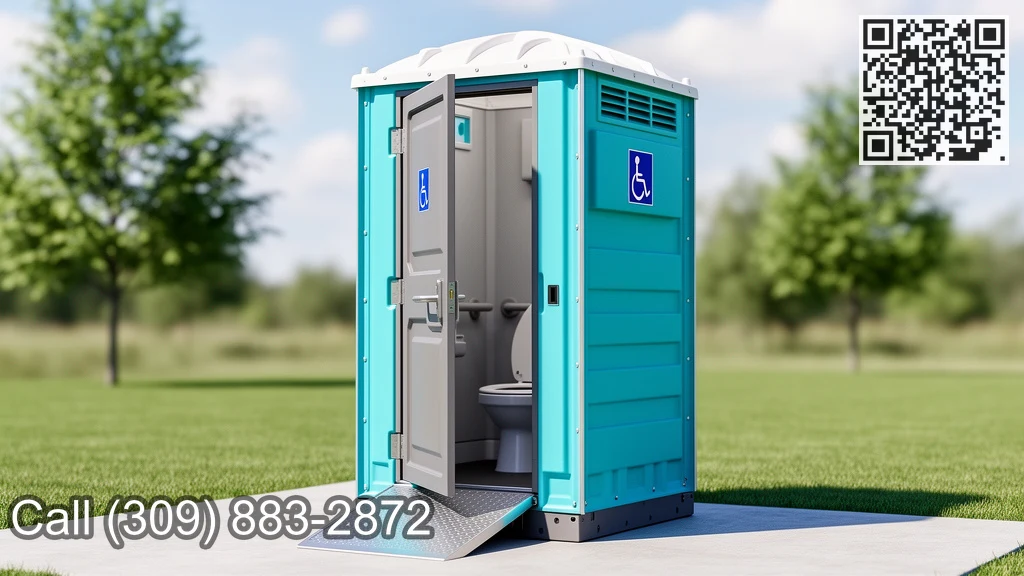
An obtainable portable unit must be identified with the International Sign of Access. That noticeable noting issues for wayfinding. It informs individuals which device is planned to provide the necessary gain access to. At hectic events, specifically after dark or during top lines, clear recognition can save someone from having to ask team for assistance or wait in the incorrect queue.
More importantly, obtainable devices should have an obtainable route and entrance. If ramps or touchdowns are required, those functions must adhere to the ADA technical demands. This is one of one of the most typical field problems. A certified device can end up being functionally pointless if it is established past soft ground, up a sudden edge, or in a place where the entrance location does not supply the needed access.
Inside the device, the requirements additionally reach right into the toilet-room technological demands. The confirmed support consists of transforming area, door navigating clearances, fixture clearances, and appropriate grab-bar and water-closet clearance regulations. That means ease of access is not a label or an advertising and marketing classification. It is a mix of technical problems that work together.
When individuals search for ada certified available mobile restrooms, what they typically want is certainty. They need to know that the unit is not merely promoted as available, but in fact set up in a way that straightens with the requirements that govern its use.
Why website placement modifications everything
Portable restroom planning tends to focus first on truck access and servicing, which is reasonable. Units need to arrive, be placed safely, and be pumped when essential. However accessibility for shipment is not the like accessibility for users.
The path to an ada mobile toilet has to be considered from the point of view of a person approaching it independently. A system put at the edge of a harsh solution lane could be practical for a truck and annoying for a guest. A system placed behind barricades might look neat on a map and come to be unpleasant in real usage. Even when the bathroom itself is the appropriate design, the surrounding conditions can weaken accessibility.
This is where experienced event managers and website supervisors often tend to do better. They walk the path. They do not simply point to a place on a strategy. They ask simple concerns. Can a person reach this entrance without detouring around cords, fencing, short-term hosting, or supplier overflow? Does the path stay usable once crowds develop? If climate turns negative, does this location come to be soft or rutted?
Those are not abstract concerns. Short-lived websites alter by the hour. What looked penalty during setup at 8 a.m. Can end up being a bottleneck by noon and a mess by night. A compassionate approach to ada mobile bathroom rental ways preparing for exactly how the site acts when it is completely inhabited, not simply when it is empty.
Event services and website services are not always treated the same
There is a crucial nuance in the standards background. The ADA requirements identify portable bathroom devices at building and construction sites made use of specifically by building and construction personnel. The validated context keeps in mind an exception from the portable-toilet access scoping requirement in the cited 1991 standard for that slim circumstance. For general portable toilet leasings, the accessible-unit demand remains.
That distinction matters because people often talk freely concerning "website services" as though every website falls under the same category. They do not. A public-facing occasion, a general rental scenario, and a building configuration used just by building and construction workers might be discriminated under the details scoping factor noted in the verified materials.
This is a great location for caution. The exception language individuals listen to secondhand can travel further than it should. I have seen teams assume that due to the fact that a jobsite is active, they can neglect accessibility questions entirely. The validated information right here does not sustain that broad jump. It speaks with a specific construction-site context used specifically by building and construction workers under the pointed out 1991 scoping provision, while reaffirming that general mobile restroom rentals still carry the accessible-unit requirement.
When in doubt, that is the moment to slow down and validate the specific use situation instead of relying upon a phrase a person heard from another crew, location, or rental workdesk years ago.
The technical side occupants need to ask about
Most clients are not expected to memorize every ADA technical stipulation. Still, there is a useful distinction between getting blindly and asking informed questions. If you are in charge of a toilet order, you ought to be paying attention for signs that the supplier recognizes greater than inventory labels.
A genuine discussion of ada certified mobile restrooms must touch the system, the strategy, and the placement conditions. If a provider only speaks about "the larger version" and absolutely nothing else, that is normally a sign that you require a more detailed conversation.
Here are the concerns that actually aid:
- How will certainly the easily accessible unit be identified on site?
- What does the vendor requirement from you to maintain an obtainable route and entrance?
- If a ramp or landing is required, exactly how is that being taken care of under ADA technological requirements?
- Has the placement area been examined for navigating at the door and around the entrance?
- If there will be numerous collections, how is the accessible-unit matter being handled in each one?
That brief checklist is useful because it keeps the discussion rooted in the standards we know use. It also changes the emphasis from "Do you have an ADA unit?" to "Just how will this be certified once it is installed?"
Counting systems without guessing
The 5 percent rule appears simple until an occasion expands in phases. A coordinator may start with one collection, add one more near parking, then tack on a smaller sized bank by an overflow area. By then, restroom orders are commonly being adjusted quickly, and access can get counted loosely.
The much safer state of mind is to deal with each bathroom cluster as its own ease of access checkpoint. If there is a grouping of single-user mobile toilets, ask whether a minimum of 5 percent of that cluster come. This is especially crucial at larger events where guests may not move freely from one location to an additional, or where cross countries, fence, or group thickness properly isolate one bank from another.
There is also a human factor to obtain this right. The individual who requires the ada certified portable commode ought to not have to leave their prompt area and travel further than everybody else simply since obtainable planning was systematized for convenience.
That functional point usually reverberates more than lawful language. Accessibility is not an unique perk. It is the basic expectation that a washroom will be available where people are already being guided to go.
Common configuration failings that start with great intentions
Very few availability issues start with poor objectives. The majority of begin with rushed decisions, assumptions, or a website that transformed after the very first strategy was drawn. The staff wants to maintain the row directly. The organizer wishes to conceal restrooms behind a fence line. The venue desires them away from the best picture angle. Everyone involved has a reason. After that the accessible device winds up in the least functional location.
The patterns are familiar. The easily accessible device is purchased appropriately however put on a course that becomes blocked throughout occasion build-out. The icon is present, yet the entrance location is cramped by neighboring equipment. A required ramp or touchdown is treated as optional because the quality looked manageable from a distance. A collection count is done across the website total rather than at the actual location of each bank.
None of that requires poor intent. It just needs enough moving components and insufficient final review.
One practice that helps is doing a last walkthrough after everything else is in area, not before. Short-term occasions specifically are infamous for altering shape during setup. A route that was clear at delivery can be narrowed by barriers, generators, camping tents, staging, or vendor stock by the time gates open. Accessibility ought to be examined after those shifts take place, since that is the condition the general public will really experience.
The language around "ADA" can be slippery
In the rental market, phrases like ada compliant mobile toilets, ada-compliant mobile restrooms, ada certified portable commodes, and ada-compliant mobile bathroom often get made use of in sales products and search terms. Customers utilize those phrases because they need fast peace of mind. Suppliers use them since they match what individuals kind right into search bars.
Still, those labels are only handy if they bring about the real needs. An item summary on its own does not guarantee the complete arrangement is certified. That is why it is worth being precise in conversation. Ask whether the device is planned to meet the applicable toilet-room technical needs. Ask exactly how the entrance accessibility will be dealt with. Ask just how it will be identified. Ask exactly how the route will certainly continue to be available after the website is totally built.
That level of specificity safeguards every person. It aids the renter prevent surprises, and it helps the supplier prevent being judged entirely on a common tag that claims also little.
Temporary does not indicate informal
There is a broader compliance reality worth seeing. Accessibility enforcement does not stall even if a setup is short-term, outdoors, or logistically challenging. The current expansion of a Division of Justice target date on web and mobile availability guidelines for state and city governments is not concerning mobile toilets straight, but it does reflect a bigger fact: ADA conformity stays active across sectors. Short-term operators, occasion managers, places, public companies, and specialists are all operating in an atmosphere where accessibility assumptions are significantly alive.
That wider backdrop matters due to the fact that it alters the tone of planning. Accessibility is no longer something groups can deal with as a box for another person to examine late in the process. It belongs in the first round of site choices, together with utilities, group circulation, and safety.
When a municipality, college, not-for-profit, or place team is renting an ada portable restroom for a public function, the best technique is positive as opposed to defensive. You are not simply attempting to stay clear of an issue. You are trying to develop a website individuals can utilize with dignity and without unneeded friction.
What great coordination looks like on the ground
The best toilet configurations generally originate from very early coordination between the tenant and the provider. Shortly conferences, just clear decisions made before vehicles roll. The renter describes where the clusters will be. The provider clarifies what problems the obtainable units require. Somebody checks whether the chosen areas can support an easily accessible path and entrance. Then a last review occurs once all short-lived framework is in place.
That procedure appears common because it is. Ease of access job is typically less concerning brave repairs and more about disciplined coordination.
A tiny exterior performance is a good example. If the organizer knows there will certainly be one toilet financial institution near the entryway and another near giving ins, the 5 percent need need to be considered individually for those collections from the start. If the easily accessible unit at the giving ins location would need to rest beyond a tight fenced corner, that trouble must be fixed prior to distribution, not after guests arrive. If the route near the entryway is most likely to fill with lines up, the accessible path needs to be secured in the layout instead of improvised with apologies later.
The exact same reasoning puts on fairs, races, and pop-up public events. At any time you hear a person say, "We'll figure out where the ADA unit goes as soon as the rest is set," you are taking a look at a plan that might come to be expensive, awkward, or noncompliant in a hurry.
Renting with care rather than assumptions
If you are the client, it assists to frame the order with sensible information instead of a solitary request for "one ADA unit." Inform the service provider how many toilet collections you expect. Describe whether the event is public-facing. Mention any kind of grade changes, constrained courses, or areas that have a tendency to get soft. If the site will progress during arrangement, say that early.
If you are the service provider, plain language goes a long way. Explain that an ada certified available mobile restroom is not only concerning the device design. Discuss that route, entrance, and identification issue also. That sort of conversation frequently stops problem later since it sets realistic expectations before placement day.
One valuable mental change is to stop considering the obtainable unit https://pristineportablesil.com/fresh-water-tank-rental/ as an unique washroom and begin thinking about it as component of the general user experience. For the individual counting on it, this is not a side problem. It is the washroom plan.
A last sensible standard
The most convenient way to pressure-test your strategy is to visualize one visitor or employee showing up on website and needing that washroom without help. Can they find the marked system? Can they reach it by an easily accessible path? Can they enter it correctly? Has the cluster been counted properly? If ramps or landings are required, have those been taken care of to the needed requirement? Does the configuration still work after the site fills up up?
Those concerns keep the emphasis where it belongs. Out marketing terms, out presumptions, and not on the idea that momentary facilities should have short-lived thinking. The requirements for an ada portable toilet are genuine, therefore is the difference they make when a site is planned with care.
When people search for ada certified portable commode needs, what they typically need is illegal theater. They need a bathroom configuration that respects the regulation, fits the site, and benefits individuals who depend on it. That is the fundamental work. Everything else is detail.
 Ask ChatGPT
 Ask Grok
 Ask Perplexity
 Ask Claude
 Ask Google AI
 Ask You